Planning a travel gap year
In 2016, Thomas and I decided to do an around the world year. It had been a complete dream of mine for years and finally it was going to happen. But there was definitely some planning and steps we needed to take to make it a reality.
Planning a full year of travel sounds like a dream—and with the right approach, it’s entirely achievable. While it may feel overwhelming at first, breaking it down into clear steps makes the process manageable and even enjoyable. Here are some of the key steps for planning your gap year or adventure.
step one: Define your vision and priorities
Start by asking yourself what you want from this experience. Are you chasing adventure, relaxation, cultural immersion, or a mix of everything? Do you want to slow travel and stay longer in fewer places, or move frequently to see as much as possible? Clarifying your goals will shape every decision that follows.
Our Step one
I really wanted to spend time in areas of the world that I hadn’t been to before and to be able to take advantage of staying in a region for a while. We invited friends and family if they wanted to join and that shaped some of where we were and when. We planned as we went. We would look for cheap flights and ended up in some places we didn’t intend to originally from that – Mount Kilimanjaro and Bali. We went at a very fast pace. If we were to do it again we would slow way down.
Step two: Set a realistic budget
A year of travel doesn’t have to be outrageously expensive, but it does require careful planning. Consider major costs like flights, accommodations, food, insurance, and activities. Research average daily expenses in your desired destinations and build a cushion for unexpected costs. Many travelers also explore ways to save money, such as house sitting, remote work, or long-term rentals.
My Step Two
I really had no idea how much our trip would cost. I just figured we would try our best to budget travel including hostels, camping, etc. We would take local transportation and the budget flights to make it work. We tracked our money as we went. I had been saving for years to make this a possibility. I think it is better to overestimate how much you will spend. Pro tip: don’t skimp on experiences to save money.
Step Three: Choose your destinations wisely
Rather than randomly hopping across the globe, map out a rough route. Group destinations by region to minimize travel costs and fatigue. Think about seasonality—visit Europe in spring or fall, Southeast Asia in the dry season, and avoid peak tourist crowds where possible. A well-planned route can save both time and money.
My Step Three
This is really important. If you are going in peak season you are going to be paying a lot more. We also picked regions so we weren’t going from continent to continent and could utilize public transportation more. Spending time in more affordable areas also stretches the dollar further. We didn’t spend any time in Europe or South America during our year trip. Here is our general itinerary: 3 months Africa, 1 month USA cross country east to west, 3 months Asia, 1 month Australia, 1 month New Zealand, 1 month Costa Rica/El Salvador, 2 weeks Mexico, 2 months USA cross country west to east.
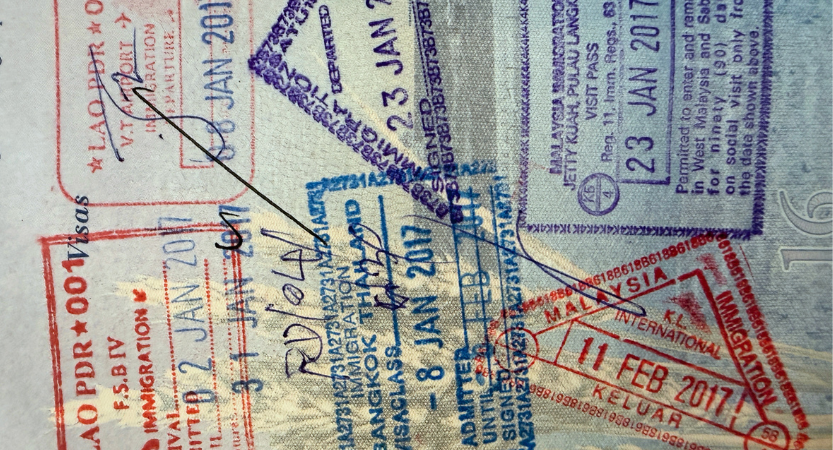
Step Four: Check passport, visa and entry requirements
Make sure your passport is valid for at least six months beyond your travel dates. Research visa requirements for each country, including how long you can stay and whether you need to apply in advance. Some countries offer visa-free travel, while others require more preparation.
My Step Four
This is a must. Thomas had to get a new passport before our travels to make this work. We travelled to places that had no visa or visas on arrival to make this easier for traveling. If you are going to places where you need visas prior to travel that may involve more planning as you go.
Step Five: Plan (don't overplan) Your Itinerary
It’s tempting to schedule every detail, but flexibility is key for long-term travel. Book your first few accommodations and perhaps a few must-do experiences, then leave room for spontaneity. You may discover places you want to stay longer—or skip altogether.
My step five
We did plan as we went and ended up in some places we never intended to. As you travel, you meet other people who give amazing recommendations. You should always book the first place you are arriving but then you can go from there.
Step Six: Arrange your finances and banking
Notify your bank of your travel plans and consider using a credit card with no foreign transaction fees. Having access to multiple forms of payment is smart in case one doesn’t work. Budget tracking apps can help you stay on top of spending throughout the year.
Our step six
We got a debit card that had no ATM fees through Charles Schwab. This was great for getting local currency out on arrival. Having no foreign transaction fees is a must. It is great to have multiple cards in case there is an issue with one. We also had some hidden cash in case of an emergency. Bring new crisp bills. We tracked our spending on a spreadsheet during the year.
Step seven: Prepare for Medical Needs
When you travel you need to have some sort of medical coverage. You also should gather a small first aid kit with commonly needed medications to travel with (acetaminophen, ibuprofen, loperamide, etc.) Also, before traveling you should have your vaccines updated. Things like typhoid, hepatitis A and B, yellow fever, Japanese encephalitis (if prolonged travel Asia especially rural areas during mosquito season) are recommended.
Our Step Seven
We got medical and travel insurance to cover us for the year. Certain countries need your yellow fever vaccine travel card so we had that and got other vaccines. We planned not to be in Asia during Japanese Encephalitis season so did not get that vaccine. We made a travel medicine bag – our first stop was Africa, so we got malaria prophylaxis prescriptions as well as anti-nausea, motion sickness medicine, anti-diarrheal and pain relievers to have on hand. Trust me, those medications are so necessary, and I was very grateful several times to have meds on hand.
Step seven: Prepare for Medical Needs
When you travel you need to have some sort of medical coverage. You also should gather a small first aid kit with commonly needed medications to travel with (acetaminophen, ibuprofen, loperamide, etc.) Also, before traveling you should have your vaccines updated. Things like typhoid, hepatitis A and B, yellow fever, Japanese encephalitis (if prolonged travel Asia especially rural areas during mosquito season) are recommended.
Our Step Seven
We got medical and travel insurance to cover us for the year. Certain countries need your yellow fever vaccine travel card so we had that and got other vaccines. We planned not to be in Asia during Japanese Encephalitis season so did not get that vaccine. We made a travel medicine bag – our first stop was Africa, so we got malaria prophylaxis prescriptions as well as anti-nausea, motion sickness medicine, anti-diarrheal and pain relievers to have on hand. Trust me, those medications are so necessary, and I was very grateful several times to have meds on hand.
Step eight: secure travel insurance
For a trip of this length, travel insurance isn’t optional—it’s essential. Look for a policy that covers medical emergencies, trip interruptions, and lost belongings. It provides peace of mind so you can focus on enjoying the journey.
Our gap year step eight
We got travel health insurance for the year. Of note, our travel insurance did not cover medical in the United States so make sure to look very closely at your policy. A lot of travel credit cards have some travel insurance attached.
Step nine: Pack and pack light
When you’re traveling for a year, everything you bring matters. Stick to versatile clothing, comfortable shoes, and essentials you’ll use often. Remember—you can buy things along the way if needed.
Our gap year step nine
We lived out of our Tortugas– this is a travel designed backpack that is lightweight. We did a lot of budget airline with weight limits, so we packed light! It is incredible to see that you need very little. Bring layers and essentials. We bought things we needed and left behind what we didn’t.
Step ten: Plan for work or time off
If you’re not taking a full year off, think about how you’ll sustain yourself. Remote work, freelancing, or taking a sabbatical are all options. Make sure you understand any work restrictions based on visas and location.
Our gap year step ten
I took a sabbatical from work and Thomas quit his job and got a new job on return. I originally planned to quit my job because I was not sure about taking a break. They were so flexible and I started back to work with the same company on our return. Each job has its own policies so it is worth exploring if you want to go back to the same job.
We did not work on this year off and it was great! If we did this again we may explore some part time or virtual work (though I highly doubt it!).
Step Eleven: Prepare for life back home
Before you leave, take care of responsibilities like housing, bills, subscriptions, and mail. Some travelers rent out their homes or sublet to offset costs. Setting things up properly ensures fewer worries while you’re away.
Our gap year step eleven
We were both renters, so we luckily did not have housing, bills, etc. We cancelled subscriptions. I cancelled my cell phone plan. We diverted our mail to our respective parents’ house. I paid for my car insurance and had trusted friends and family babysit my car. If we did this again, we would have property to sublet out and some additional responsibilities we would need to handle before leaving.
Step Twelve: Stay Connected and Organized
Keep digital copies of important documents like your passport, insurance, and reservations. Apps for maps, translation, and itinerary management can make your life much easier on the road.
Our Gap Year Step Twelve
There are so many great apps out there for traveling. Back in 2016-2017, I cancelled my phone plan and got an unlocked phone with plan of getting sim cards. I never did it. I just used wifi. I used an app Galileo which had offline maps. We had copies of our passports and insurance and I would screenshot all that on my phone. Now with the world being even more connected I would keep a cellphone plan that had international coverage. Thomas had this and it was super handy when we were traveling in Australia and New Zealand for Google maps while we were driving. WhatsApp is key to have and used for a lot of communication while traveling.
Step Thirteen: Embrace the Experience
Finally, remember that a year of travel is as much about the journey as the destinations. Things won’t always go as planned—and that’s part of the adventure. Stay open, flexible, and curious.
Our Gap Year Step Thirteen
Speaking from experience, this is something you will never forget or regret. You will learn so much about yourself and things definitely don’t go as planned. For example, a flight getting canceled and rescheduled for 5 days later. The places you see and things you do will amaze you and the misadventures, well, that is part of the fun.
Planning your travel Gap year
Planning a year of travel takes effort, but it’s one of the most rewarding investments you can make in yourself. With the right preparation and mindset, you’ll create experiences and memories that last a lifetime.